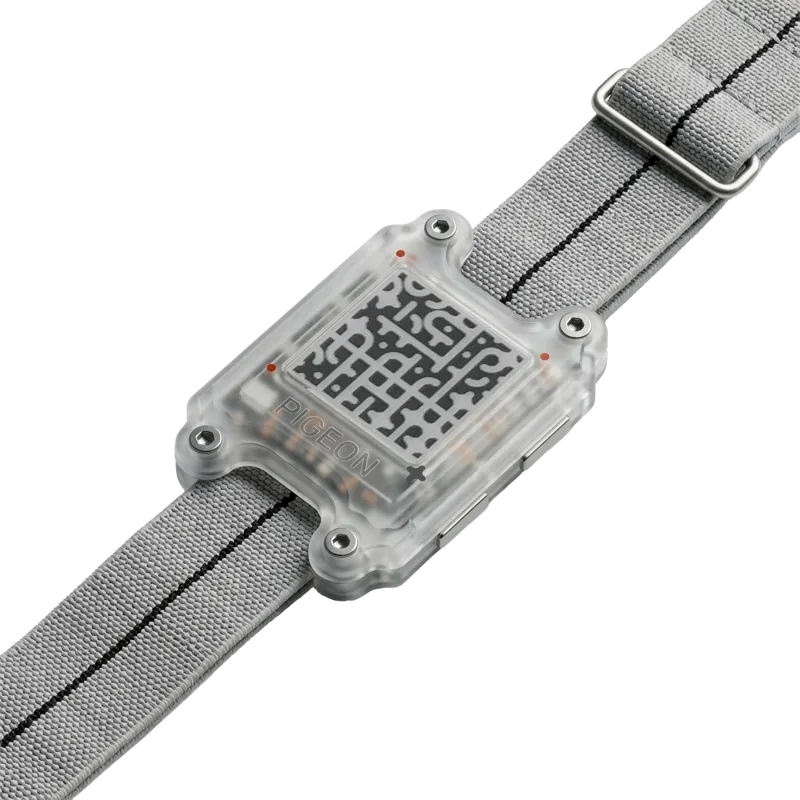
The idea emerged from a challenge: could a game create social connection without pulling people into screens? Inspired by childhood games like Senior Assassin and retro digital toys like Tamagotchis, Fool’s Gold exists somewhere between digital pet and social deduction game (think Werewolf or Mafia). It’s neither passive like a keychain charm, nor attention-seeking like a smartphone app. Instead, it acts as a quiet invitation to connect.

Players can take on play styles that work for them (robber, bounty hunter, doctor) and navigate an open-ended ecosystem through quick real-world encounters. Heists, duels, and revives are the backbone of the system, blending skill and social dynamics. The core mechanic is a prisoner's dilemma-style “heist” that asks players to choose between collaboration and betrayal - with a few twists thrown in to keep things interesting (and cordial).


The devices communicate via ESPNOW and infrared (IR), enabling local interactions with minimal power and no need for WiFi. Each unit is built around the ESP32 microcontroller, programmed in Rust, and costs less than £10 in parts. I am in the process of building out a custom PCB and bag charm form factor for field testing with a small group of friends.
Fool’s Gold isn’t about winning. It’s about giving people a low-effort reason to connect - in hallways, in the break room, or waiting for the train. It's kind of like an inside joke, low barrier of entry but makes you feel welcome.
These are the results of a ~6 week sprint. I am now in the process of building out a custom PCB and bag charm form factor for field testing with a small group of friends..